
Madman Summit: Behind The Mask Of Masculinity Builds Space For Black Men To Speak, Heal, And Connect
On Saturday, Nov. 29, Hip Hop Healing hosted MADMAN Summit: Behind the Mask of Masculinity at CEE Centre For Young Black Professionals. The summit was a community rooted gathering focused on confronting the emotional “mask” Black boys and men are often taught to wear, while creating space for honest conversations about mental health, vulnerability, and connection.
The summit’s purpose is direct and intentional. Its stated goals include confronting emotional suppression, creating space for honest conversations about mental health, amplifying Black male voices in the wellness movement, deconstructing limiting narratives around identity and emotional intelligence, and building a culture of care, accountability, and brotherhood among Black boys and men.
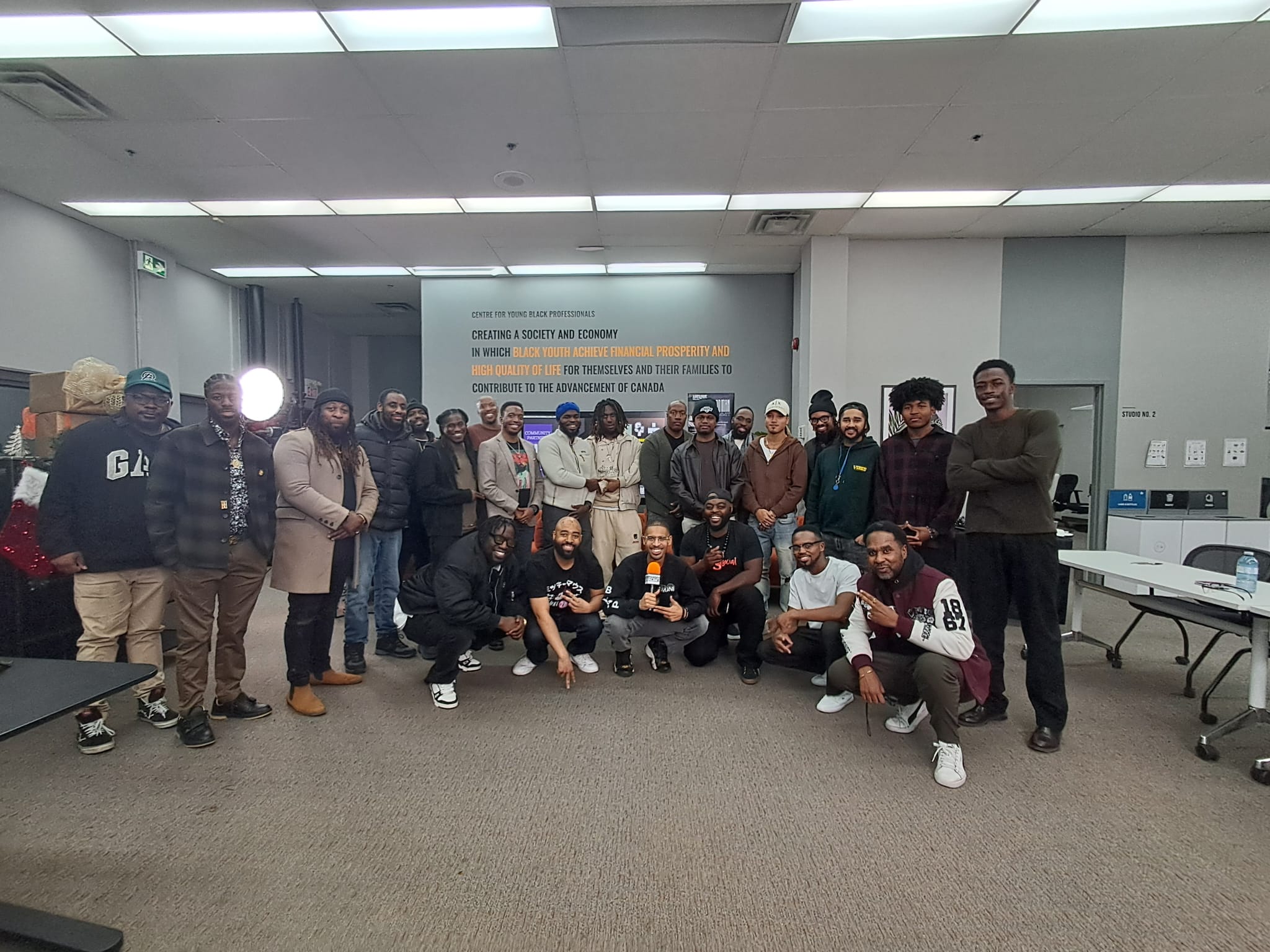
How MADMAN Began
In an interview with Selina McCallum, Hip Hop Healing founder Jermaine Henry shared that MADMAN began with music long before it became a summit.
“It first started with the song Mad Men,” Jermaine explained, recalling how producer Eric Flow sent him an instrumental several years ago. “We just had a shared experience of just being a Black man, just navigating life, you know, life and relationships and society.”
Jermaine described the song as both an emotional outlet and a grounding tool during a difficult period in his life. “For me, that song was like an outlet for me to kind of share a bit of my frustrations, but also a bit of affirmations for myself, to kind of believe in myself again.”
He spoke openly about dealing with depression, sharing that he has been diagnosed with persistent depressive disorder. Music, he said, became one of the ways he could process what he was carrying. “One of the outlets was music,” he said, describing how creating and sitting with the work helped him through personal and professional challenges.
The conversations sparked by the song eventually became communal. Jermaine described how, at last year’s Mad Men Deciphered event, the group spent significant time unpacking the meaning behind the track. “We ended up spending an hour and a half talking about it with the people that were there,” he said. “Really resonating with the challenges of a Black man and a Black woman in society and how we have to navigate.”
He added, “Often there’s things that are underneath that, and this track gives us permission to express our emotions, but also to look deeper into what’s going on emotionally, but as well as societally, the different projections that they put on us.”
Behind The Mask Of Masculinity
This year’s summit builds on that foundation with a sharper focus. “Oftentimes we have to wear this mask,” Jermaine said, speaking about masculinity and the expectations placed on Black men. “People see us in so many different lights. And we’re also just trying to mask in the sense of showing a brave face.”
He explained that constantly having to perform strength can become heavy. “That can be something that you don’t feel like you can really be your authentic self, or who to talk to,” he said. The summit, he added, is meant to be “a bit of relief” and a space where people can “really just show up as ourselves.”
Bridging Community And Clinical Care
Jermaine also spoke about a gap he sees between community based programming and the formal healthcare system. “There tends to be a huge gap,” he said, pointing to the disconnect between Western, colonial approaches to mental health and culturally grounded forms of care.
Hip Hop Healing aims to bridge that gap through the arts and through hip hop as a cultural practice. “Hip hop is a culture, a movement,” Jermaine said. “So being able to leverage hip hop as a way of being a culturally responsive way to our mental wellbeing” is central to the work.
At MADMAN, that bridge is visible. Jermaine shared that social workers were present at the event, and that some invited their clients to attend. “If people needed to get support or learn more information on where to get support, they can go for that,” he said. His goal, he explained, is to connect community and clinical care in a way that feels accessible rather than intimidating.
Why Hip Hop Matters
Jermaine emphasized that hip hop, and especially emceeing, plays a critical role in the summit’s structure. “When we talk about emceeing, it’s not always even just about rap,” he said. “It’s really about moving a crowd. It’s about speak, divine speech, eloquent speech, being able to express yourself through word.”
He tied that directly to mental health. “A lot of times in mental health, we’re silenced, or we silence ourselves,” he said. “So to be able to cultivate our voice and also to be heard, to be seen and heard, helps to bring more connection and momentum going forward.”
Reflecting on last year, Jermaine said one of the biggest outcomes was people’s willingness to speak. “What showed the greatest outcome of the event was everyone’s willingness to share their voice and to speak,” he said. “Everyone’s just dropping gems, dropping bars, and we’re all receiving it.”
Inside The Summit
The summit follows a clear flow designed to ground, open, and connect participants:
-
Check in and cultural refreshments
-
Creative activity
-
BRAVE(R) Agreements
-
Behind the Mask panel
-
Mindfulness moment
-
Breakout sessions
-
Live performances
-
Open mic and closing
The BRAVE(R) framework anchors the space with shared agreements: Bold, Real, Accountable, Vulnerable, and Expressive or Relational.
The day also opens with reflection questions like “What’s your current vibe in one word or phrase?” and “Why is it important for you to be here?” Participants are also invited into partner sharing with the prompt, “What does showing up braver mean to you today?”
Reflections From Last Year
Jermaine described the intergenerational makeup of last year’s summit as one of its most meaningful aspects. “It felt like the dream, you know, the village coming together,” he said. He shared that attendees ranged from 17 to 65 years old, and explained why that mattered. “That’s how we shorten the gap between getting help,” he said, noting that younger people learn from elders, while elders stay connected through younger perspectives.
When asked about highlights, Jermaine named several powerful moments. He described a keynote speech by Stacks Facts as “riveting,” adding that the speaker was direct and humble. “He was really like, ‘Yo, take care of self care. You need community, and you need to take care of your mental health,’” Jermaine said.
He also reflected on the breakout sessions, sharing that one group focused on career and mental health stayed together far longer than scheduled. “These guys didn’t want to leave,” he said. Another breakout on redesigning masculinity and conflict allowed men to unpack moments they were not proud of, with support from others in the room.
The closing portion of the event stood out deeply for Jermaine. He shared that one young man attended after his therapist suggested it and spoke about grieving his brother, who had died by gun violence weeks earlier, and his father, who passed away the year before. “Being in that room as he’s grieving, but being with brothers and supporting, it just felt so amazing,” Jermaine said.
He also recalled another moment of shared understanding. “I’m not trying to give you any advice. I just feel you. We’re here for it,” one attendee said, a sentiment Jermaine described as capturing the spirit of the space.
By the end of the night, Jermaine said the message was clear. “People are just asking, ‘Can we just do this more? We need to connect more.’”
What Comes Next
Looking ahead, Jermaine shared plans to keep the community connected beyond the summit. “The plan is for us to do a monthly Zoom call,” he said, describing it as an optional space to tap in, supported by quarterly in person gatherings.
He also spoke about long term growth. Hip Hop Healing is officially incorporated as Hip Hop Healing Global, a name Jermaine says reflects future plans. “Hopefully we do something in New York,” he said, adding that he envisions future gatherings in places like Jamaica, Ghana, or the UK, while staying grounded in local communities wherever the work expands.
At the heart of it all, Jermaine said the work is about sincerity. For anyone hesitant to attend, he offered reassurance. “Hesitation is natural,” he said, but invited people “to be a bit braver,” describing Hip Hop Healing as “just humans trying to do something positive,” and more importantly, “something that’s sincere and genuine.”
We thank Jermaine Henry for his time.
