
Why Black And Marginalized Voters Matter In Toronto’s Municipal Election
By Street Voices staff
Source: Canva Stock Images
For Toronto residents who feel politics has failed their communities, voting can seem like a waste of time.
But Rania Ahmed, project lead at Toronto Metropolitan University’s Democratic Engagement Exchange, says that’s exactly why showing up matters.
“It’s easier to ignore if we don’t show up,” Ahmed said in an interview with Street Voices.
With municipal election day set for Monday, Oct. 26, Ahmed says Black, Indigenous and other racialized communities have a stake in decisions made at city hall — even when they don’t see candidates talking about the issues that matter to them.
Housing, affordability and other everyday concerns are shaped in part by municipal decisions, she said. Yet many residents struggle to connect those issues to their local representatives, or feel their voices won’t make a difference.
“There’s a general distrust that voting will then lend itself to decisions being made to protect your community,” Ahmed said.
That distrust can grow when residents vote for candidates who fail to respond to their concerns, she said, leaving some communities feeling they have to rely on their own networks rather than elected officials.
_1792522398.png)
Source: Canva Stock Images
‘People care’ — but don’t always feel heard
Ahmed said it’s a mistake to assume young people and BIPOC communities are simply apathetic about politics.
She says some residents don’t know an election is happening, while others find election information difficult to navigate, particularly when it’s not available in languages they’re comfortable with or doesn’t explain how municipal government affects their lives.
Ahmed says there is a common stereotype around the idea that BIPOC voters don’t show up to the polls, something she says doesn't paint the full story.
She says there are barriers marginalized communities face, including access to information and resources.
“I think many young people care and they just feel like people don’t value their opinions enough,” she said.
For first-time voters, the sheer number of candidates and issues can also feel overwhelming. Ahmed said people can mistakenly believe they need to understand every policy before casting a ballot.
“I think people feel ill-equipped, not because they are, but because they’ve been made to feel that way,” she said.
Her advice: start with a few issues that matter most to you and find the candidates whose positions come closest to your priorities.

Source: Canva Stock Images
Voting is only the beginning
Ahmed said encouraging people to vote is only part of the work. Residents also need ways to hold elected officials accountable once they take office.
That means contacting councillors, attending city council meetings and continuing to push for action on community concerns.
“It's the process of voting and then consistent engagement afterwards with that system,” she said.
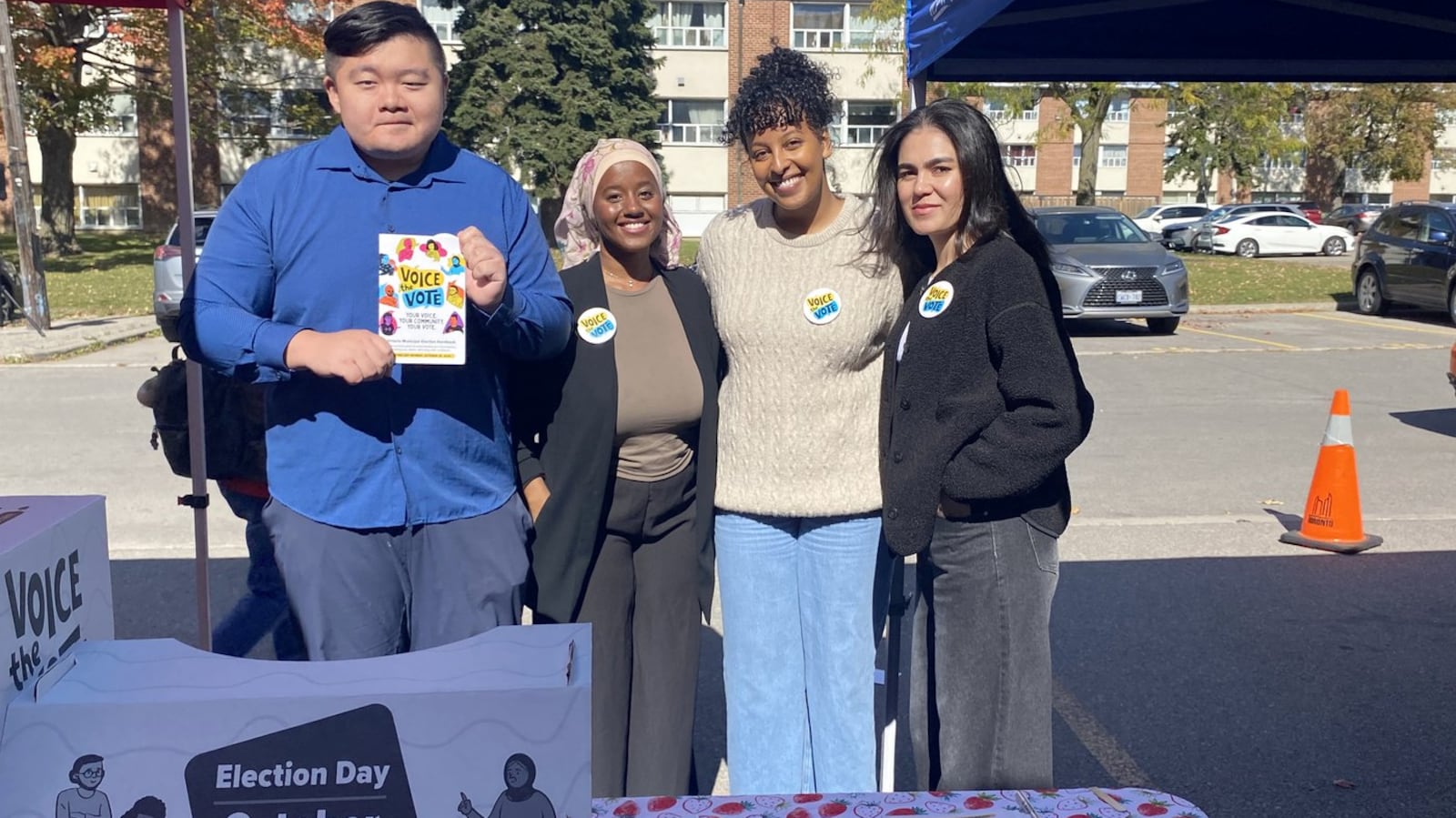
Jonathan Dong, left to right, Fatouma Rashid, Rania Ahmed and Rukhshana Ahmadi pose for a photo at an event in Toronto, Friday, Oct. 9, 2026. All four are members of Voice the Vote, a joint initiative by Toronto Metropolitan University's Democratic Engagement Exchange, and United Way Greater Toronto. THE CANADIAN PRESS/Sharif Hassan
Through Voice the Vote, a non-partisan collaboration between United Way Greater Toronto and the Democratic Engagement Exchange at TMU, Ahmed said her team works to make election information easier to understand and help communities connect their concerns to municipal decisions.
The initiative also provides microgrants to individuals and organizations developing civic engagement projects across Toronto, Peel and York Region.
Ahmed said she has been encouraged by BIPOC-led groups translating election information, organizing community events and finding new ways to engage young people, including those who aren’t yet old enough to vote.
She also wants candidates to do more to reach communities beyond election campaigns.
“Trust gets built after consistency and repetition,” she said.
For voters still unsure whether their ballot matters, her message is simple: they don’t need to know everything to take part.
“Don’t feel like if you don’t have every single piece of information, you don’t deserve to vote,” she said. “You do.”
Toronto’s municipal election is Monday, Oct. 26.
