
City Clears Dufferin Grove Encampment Again, Arresting Six As Housing Crisis Deepens
The City of Toronto has once again dismantled an encampment at Dufferin Grove Park, arresting six people as residents and supporters resisted forced displacement. The sweep took place Wednesday morning, less than a week after city officials declared the site cleared.
City crews arrived early with fencing and heavy equipment, surrounding the west side of the park and cutting off public access. Supported by private security guards and Toronto Police, workers tore down tents and removed belongings while outreach teams offered shelter spaces to residents. Many of those living in the park, however, say temporary shelters are not a viable or safe alternative to permanent housing; a core reason they continue to return despite repeated evictions.
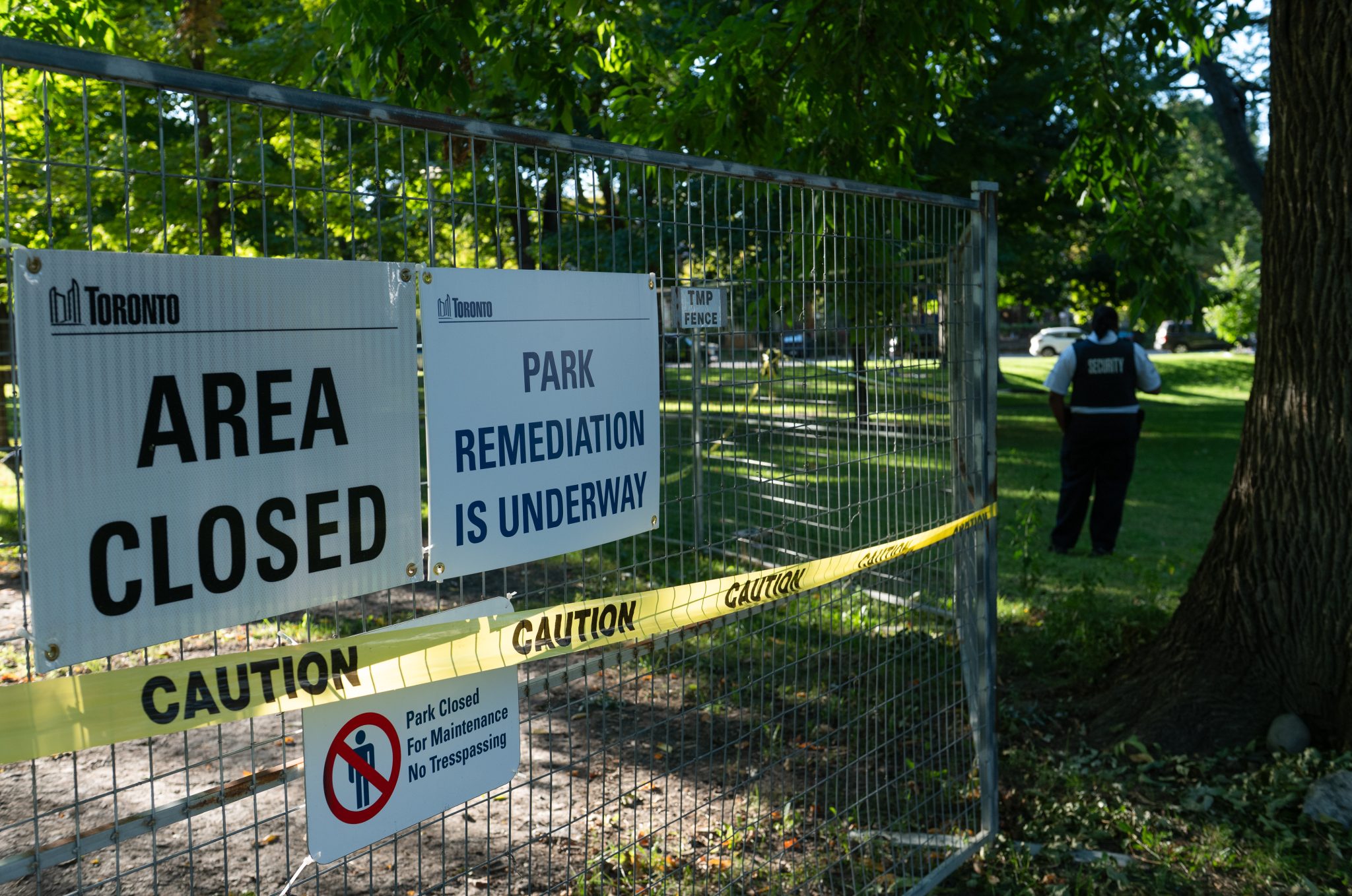
Police confirmed that six people were arrested for trespassing during the operation. A Toronto Police spokesperson emphasized that the action was led by the City, with officers on site to “assist city staff.”
In a statement, Gord Tanner, General Manager of Toronto Shelter and Support Services, said trespass notices had been issued on September 27 and that “the tents are not permitted to remain” under city protocols. The city highlighted that it had maintained “enhanced homelessness services” at Dufferin Grove for 237 days, referring more than 70 people into shelters and helping nine secure permanent housing.
But for encampment residents and housing advocates on the ground, those numbers don’t tell the full story. Temporary shelter spaces often come with restrictive rules, unsafe conditions, and a lack of autonomy. Many residents say they feel safer in community encampments than in overcrowded, understaffed shelters where theft, violence, and instability are common.
The Dufferin Grove encampment has been a recurring flashpoint in Toronto’s ongoing housing crisis, appearing in different forms over the past year. The park has become a focal point in debates about public space, policing, and the criminalization of homelessness. While city officials frame encampment evictions as necessary to maintain “park safety and accessibility,” community organizers argue that these operations do nothing to address root causes; and in many cases, make things worse by displacing people into even more precarious situations.
 Via Now Toronto_1759691084.webp)
Mayor Olivia Chow acknowledged last week that several encampment residents declined the city’s shelter offers, noting that long-term solutions depend on creating more affordable housing and enforcing protections against illegal evictions. In the meantime, the cycle continues: tents go up, the city moves in, and residents are pushed from one public space to another without real alternatives.
As fencing went up at Dufferin Grove this week, some residents accepted rides to temporary shelters. Others packed what they could carry and moved on, uncertain of where they’d end up next. For many, the park had been more than just a campsite; it was a place where they could build a sense of community, however fragile, in the absence of stable housing.
Photo Credits: Cover photo/first article photo by Laura Proctor / The Canadian Press via City News. Second article photo by Jon Blacker / The Canadian Press via Now Toronto
Original Article Source: Lucas Casaletto, City News (October 2, 2025)
