
Sway Unravels Brotherhood And Power In A Tense New Canadian Thriller
A man with status. A family built on loyalty. A life that appears untouchable.
In SWAY, that illusion collapses in a matter of hours.
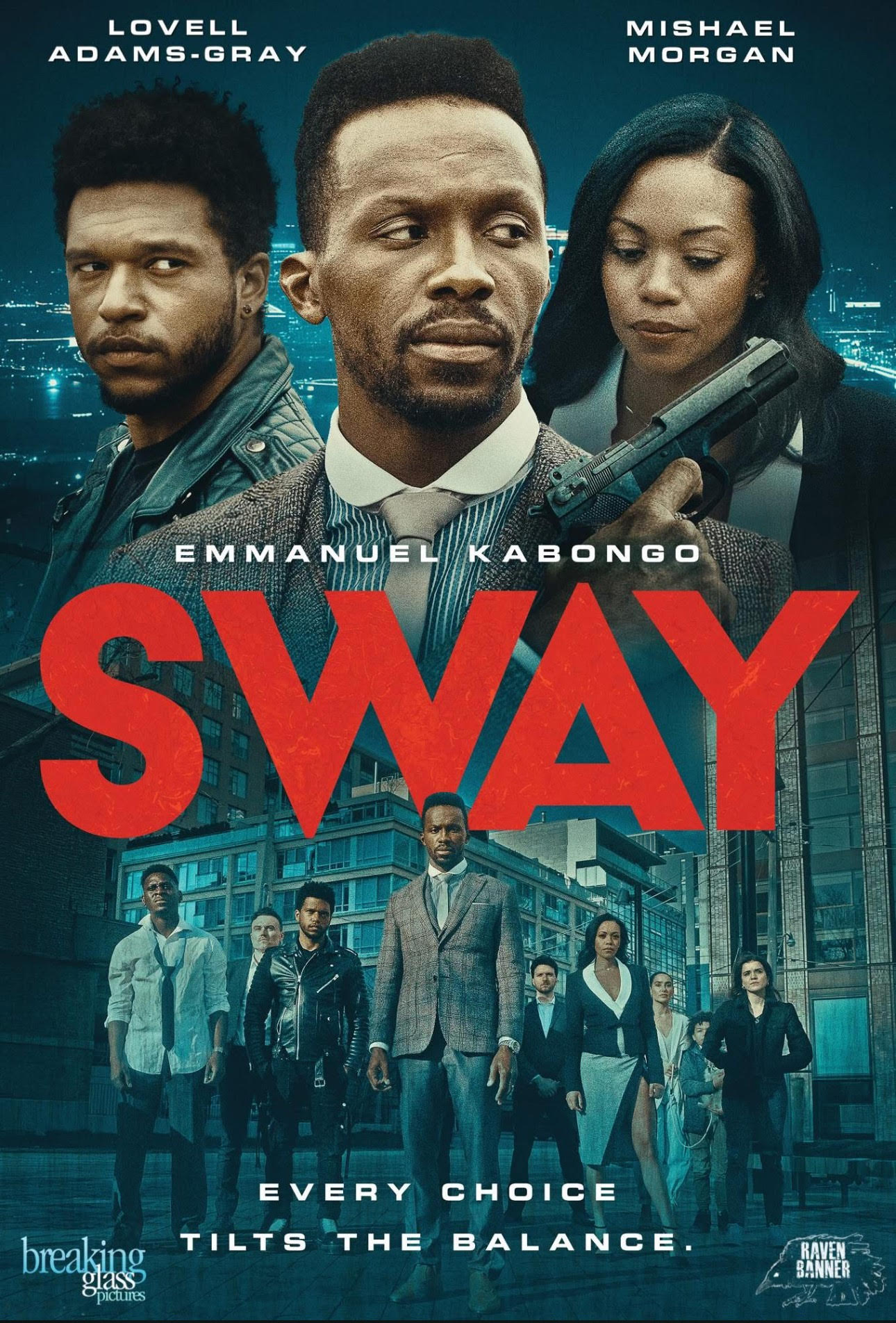
After his brother goes missing, a prominent Black community leader who seems to have it all watches his world spiral out of control. He is blackmailed by a mysterious woman. A murder pulls him into a tightening web of suspicion. Every decision becomes heavier than the last. What begins as a disappearance quickly transforms into a psychological battle about protection, power and survival.
Directed by Charlie Hamilton and Zachary Ramelan, SWAY is anchored by a commanding performance from Emmanuel Kabongo, who also serves as producer. He is joined by Mishael Morgan and Lovell Adams-Gray, delivering a cast dynamic that keeps the emotional stakes grounded even as the tension escalates.
At its core, SWAY is more than a thriller. It interrogates the performance of masculinity and the quiet weight carried by Black men in positions of leadership. The film explores what happens when pride, vulnerability and trauma collide under public scrutiny. How far will someone go to protect their kin? And at what cost?
The pacing is deliberate and relentless, allowing the audience to sit in discomfort rather than simply chase plot twists. The moral gray zones are not shortcuts to spectacle; they are central to the story’s emotional architecture. Brotherhood is both shield and pressure point. Protection becomes both love and liability.
Film Threat praised the film’s execution, writing that “Hamilton and Ramelan’s Sway succeeds as an indie thriller thanks to its tight pacing, sharp dialogue, and lead performance by Kabongo. It shows that you do not need studio bloat or a globe-trotting budget to deliver a thriller that keeps twisting the knife until the very end.”
That assessment speaks to what makes SWAY resonate. It is intimate yet expansive in theme. It operates within the thriller genre but resists flattening its characters into archetypes. Instead, it centers complexity; particularly around Black identity, trauma and the emotional contradictions of strength.
In a cinematic landscape where spectacle often overshadows substance, SWAY reminds audiences that tension can be personal, political and psychological all at once. It asks difficult questions about loyalty, morality and survival in a world that rarely affords Black men the luxury of fragility.
The result is a gripping, character-driven film that lingers long after the final frame.
